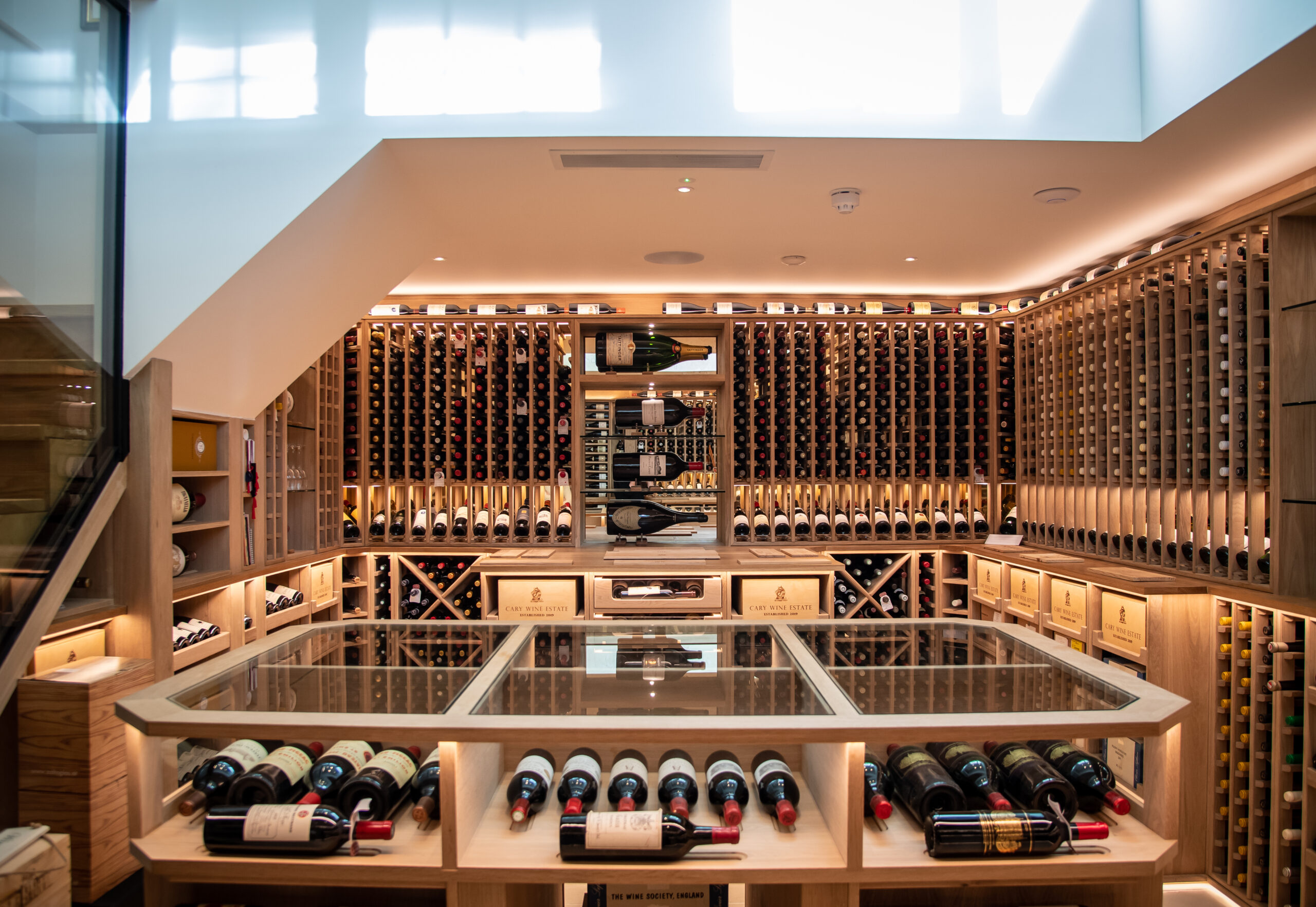
In Chicago’s competitive luxury property market, differentiation is critical. Buyers at the upper end are not simply comparing square footage or postcode. They are evaluating experience, lifestyle integration and architectural intent. For Chicago architects and property developers, the question is increasingly direct: are you missing a strategic advantage by not including a bespoke wine cellar or climate-controlled wine wall within your design?
Luxury wine storage is no longer a decorative indulgence. In the right market tier, it has become a commercially intelligent design decision.
Demand for in-home wine storage is measurable, particularly among affluent buyers.
Research highlighted by Realtor.com shows that approximately 31 percent of new-home buyers earning over $150,000 per year identified a wine cellar as a desired feature (Source). For architects designing high-end residential property in Chicago, this is significant. It places custom wine cellar design alongside other premium amenities such as media rooms and wellness spaces. At the same time, the National Kitchen & Bath Association’s 2024 research, based on more than 630 industry professionals, confirms increasing demand for dedicated beverage storage zones within kitchens and entertaining spaces. In practical terms, Chicago wine storage is no longer confined to basements. It is being integrated into kitchens, dining rooms and open-plan entertaining spaces. (Source)
The broader Chicago housing market provides important context. Recent data shows the median home sale price in Chicago at approximately $355,000, reflecting year-on-year growth. Zillow reports the average Chicago home value at around $305,000, again showing continued appreciation. While these figures represent the wider market, luxury developments in neighbourhoods such as Lincoln Park, Gold Coast and River North operate at a significantly higher tier. In these brackets, buyer expectations are elevated. Lifestyle amenities influence perception and market positioning. Developers are increasingly monetising wine storage directly. In one recent Manhattan luxury development, private wine cellars were offered at prices ranging from $40,000 to $1 million.
The principle is transferable. Wine storage is being treated as a premium architectural asset.
It is important to approach value claims with credibility. A custom wine cellar in Chicago does not automatically guarantee a fixed percentage uplift in appraisal value across all market segments. However, real estate commentary consistently notes that wine cellars enhance desirability and status positioning in higher-end homes. Kiplinger highlights that wine cellars can strengthen appeal in luxury properties, even if mid-market appraisal impact varies.
In competitive luxury markets, perceived value and emotional engagement can materially influence buyer behaviour. A professionally engineered Chicago wine room can:
• Differentiate a listing in a crowded luxury segment
• Strengthen marketing photography and staging
• Signal permanence and architectural intent
• Align the property with lifestyle-driven buyers
In upper-tier developments, these factors can contribute to stronger enquiry levels and buyer engagement.
Chicago presents a unique technical challenge for wine storage.
Seasonal temperature swings are significant. Winters can drop well below freezing, while summers bring humidity and heat. Passive or decorative wine storage is not sufficient for serious collectors in this climate.
Professional Chicago wine cellar design must account for:
• Consistent internal temperatures around 12–14°C
• Stable humidity between 55–70 percent
• Vapour barriers to prevent condensation
• Insulation designed for Midwest seasonal variation
• HVAC integration to avoid load imbalance
At Sorrells, our in-house climate control engineers guide architects with their designs, advising on pipe runs, layouts and requirements for temperature control units. Helping to deliver a seamless design with concealed technical elements.
When wine storage is integrated at concept stage, architects can coordinate these requirements seamlessly. Retrofitting later often compromises both performance and aesthetics.
Sorrells was previously commissioned by a property owner who installed a fully stocked bespoke Sorrells wine cellar specifically to enhance the sale appeal of their property.
The installation was not intended for long-term personal use. It was a deliberate strategy to elevate the property’s market positioning. The finished cellar created immediate architectural impact and reinforced a narrative of luxury, permanence and connoisseurship.
For Chicago developers, this demonstrates a key point: wine storage can be used not only as a lifestyle feature, but as a sales strategy.
For architects and developers operating in Chicago’s luxury residential market, omission may represent missed opportunity.
Custom wine cellar design in Chicago offers:
• A measurable appeal among higher-income buyers
• A differentiating feature within competitive luxury developments
• A technically sophisticated architectural statement
• A lifestyle narrative aligned with entertaining and collecting
In high-value residential design, thoughtful integration of engineered wine storage can strengthen both the emotional and commercial performance of a property.
If your next Chicago project does not currently include wine storage, it is worth asking whether the development is capturing its full potential.